

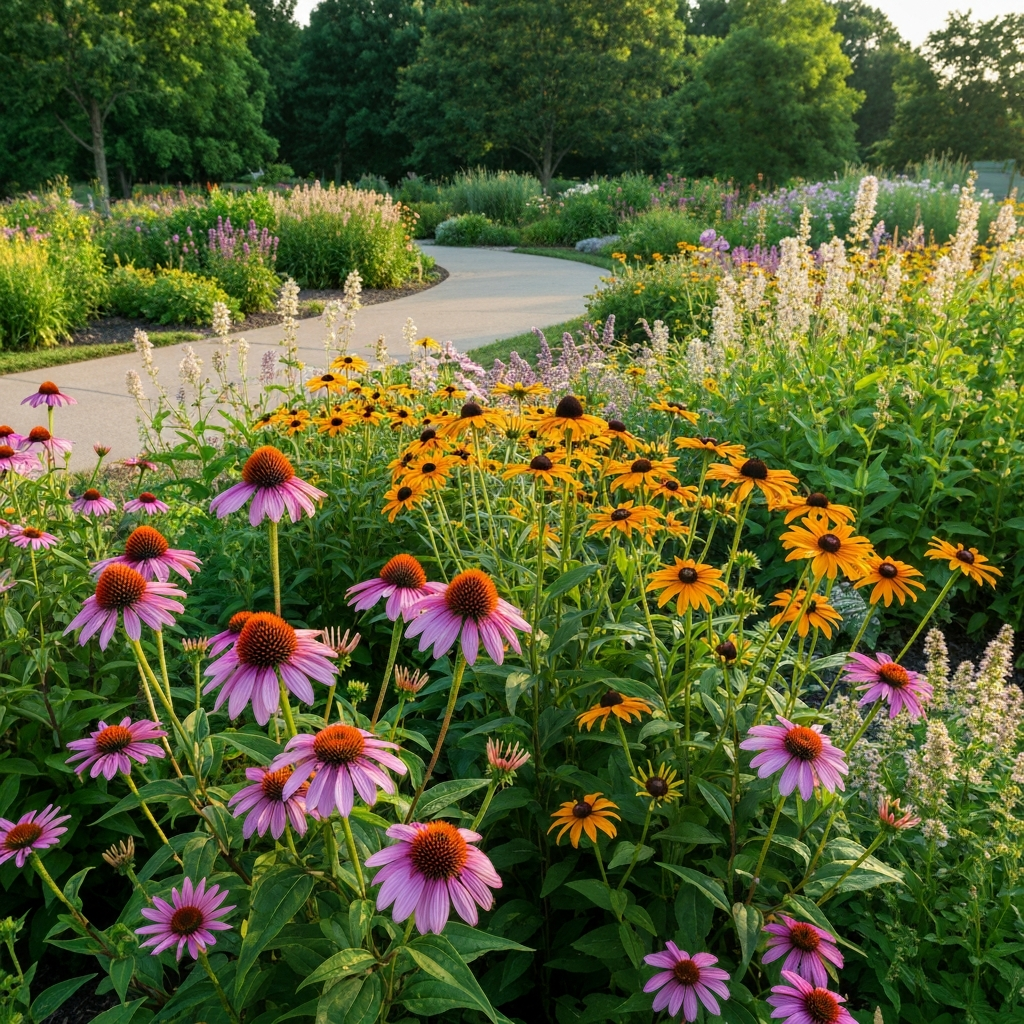
Gardening enthusiasts in Omaha are increasingly turning to native plants to create sustainable and resilient landscapes. Native species, having evolved over thousands of years in Nebraska’s unique climate and soil conditions, offer numerous advantages over non-native ornamentals.
Why Choose Native Plants?
Native plants are well-adapted to Omaha’s environment, requiring less water and maintenance once established. They play a crucial role in supporting local wildlife, providing essential habitats and food sources for pollinators like bees, butterflies, and birds. Additionally, their deep root systems enhance soil health, improve drainage, and prevent erosion.
Top Native Plants for Omaha Gardens
Purple Coneflower (Echinacea purpurea)
Blooming from June to September, the purple coneflower thrives in full sun to partial shade and attracts a variety of pollinators. Its seeds serve as a food source for birds in the fall. This drought-tolerant perennial reaches heights of 2 to 4 feet.
Black-eyed Susan (Rudbeckia hirta)
With a long blooming season from June to October, black-eyed Susans prefer full sun and are known for their resilience. They support native bees and butterflies and provide winter seed heads for birds. These plants typically grow 1 to 3 feet tall.
Wild Bergamot (Bee Balm) (Monarda fistulosa)
Flowering from July to September, wild bergamot is a favorite among native bees. It grows 2 to 4 feet tall and thrives in full sun to partial shade. Its aromatic leaves and flowers add sensory appeal to gardens.
Little Bluestem (Schizachyrium scoparium)
This ornamental grass reaches heights of 2 to 4 feet and displays brilliant rust-red fall color. It provides nesting sites for native sparrows and is highly drought-tolerant.
Wild Ginger (Asarum canadense)
Ideal for dense shade, wild ginger serves as a groundcover and host plant for the Pipevine Swallowtail butterfly. It spreads slowly but reliably, covering 12 to 18 inches per plant.
Planting and Maintenance Tips
For optimal results, plant native species in spring or fall. During the first year, water weekly during dry spells to help establish roots. By the third year, most native plants become self-sufficient, requiring minimal care. Avoid over-fertilizing, as native plants often perform better in average or poor soils, and excessive nutrients can lead to floppy growth and reduced flowering.
Where to Find Native Plants
Several local resources offer native plants suitable for Omaha gardens:
- OmahaPlants.org: An extensive database of plants well-suited for the Omaha region, providing information on shrubs, grasses, herbaceous plants, and trees.
- Nebraska Statewide Arboretum: Offers native plants and educational resources to help gardeners select and care for native species.
- Nebraska Monarchs: Provides free native plant gardens to individuals and organizations, aiming to support pollinator habitats.
By incorporating native plants into your garden, you contribute to a healthier ecosystem, conserve water, and enjoy a landscape that reflects Nebraska’s natural beauty.