

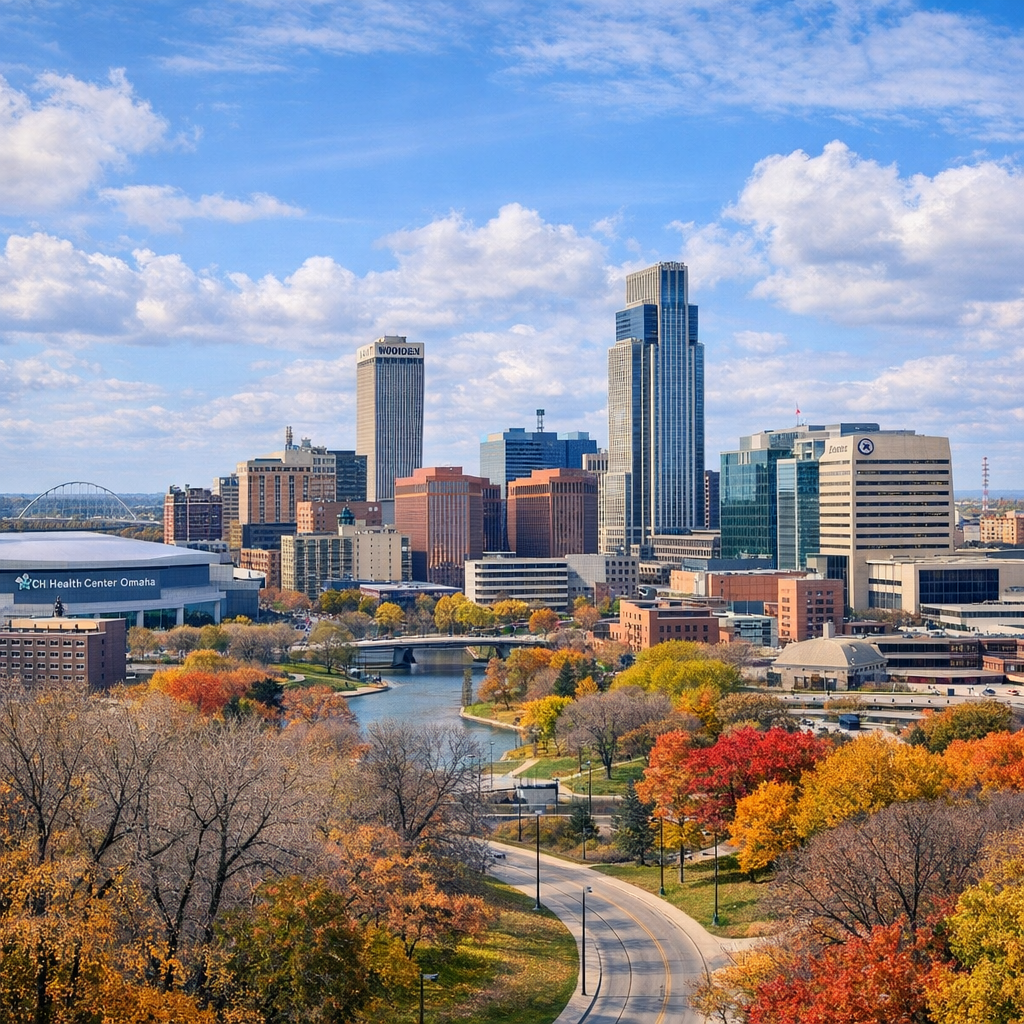
Omaha, Nebraska, experiences a humid continental climate characterized by hot summers and cold winters, with significant seasonal variations.
Temperature Patterns
Throughout the year, Omaha’s temperatures fluctuate considerably. The coldest month is January, with average highs around 35°F (1.7°C) and lows near 17°F (-8.3°C). In contrast, July is typically the warmest month, boasting average highs of 87°F (30.6°C) and lows around 68°F (20°C). This range highlights the city’s distinct seasonal shifts.
Precipitation and Humidity
Omaha receives an average annual precipitation of approximately 30.7 inches (780 mm). June tends to be the wettest month, averaging 4.94 inches (125 mm) of rainfall. Humidity levels vary, with an annual average of 70%, contributing to the city’s diverse weather experiences.
Seasonal Considerations
Spring and summer months often bring thunderstorms, some of which can be severe. Residents should stay informed about weather forecasts during these periods. Winters are marked by cold temperatures and occasional snowfall, necessitating preparedness for icy conditions.
Environmental Awareness
Beyond weather patterns, Omaha has faced environmental challenges, notably lead contamination from historical industrial activities. The Omaha Lead Superfund Site encompasses residential areas affected by lead pollution. Ongoing cleanup efforts aim to mitigate health risks associated with lead exposure. Residents are encouraged to stay informed about these initiatives and participate in community health programs.
Understanding Omaha’s climate and environmental landscape enables residents to make informed decisions, ensuring safety and well-being throughout the year.