

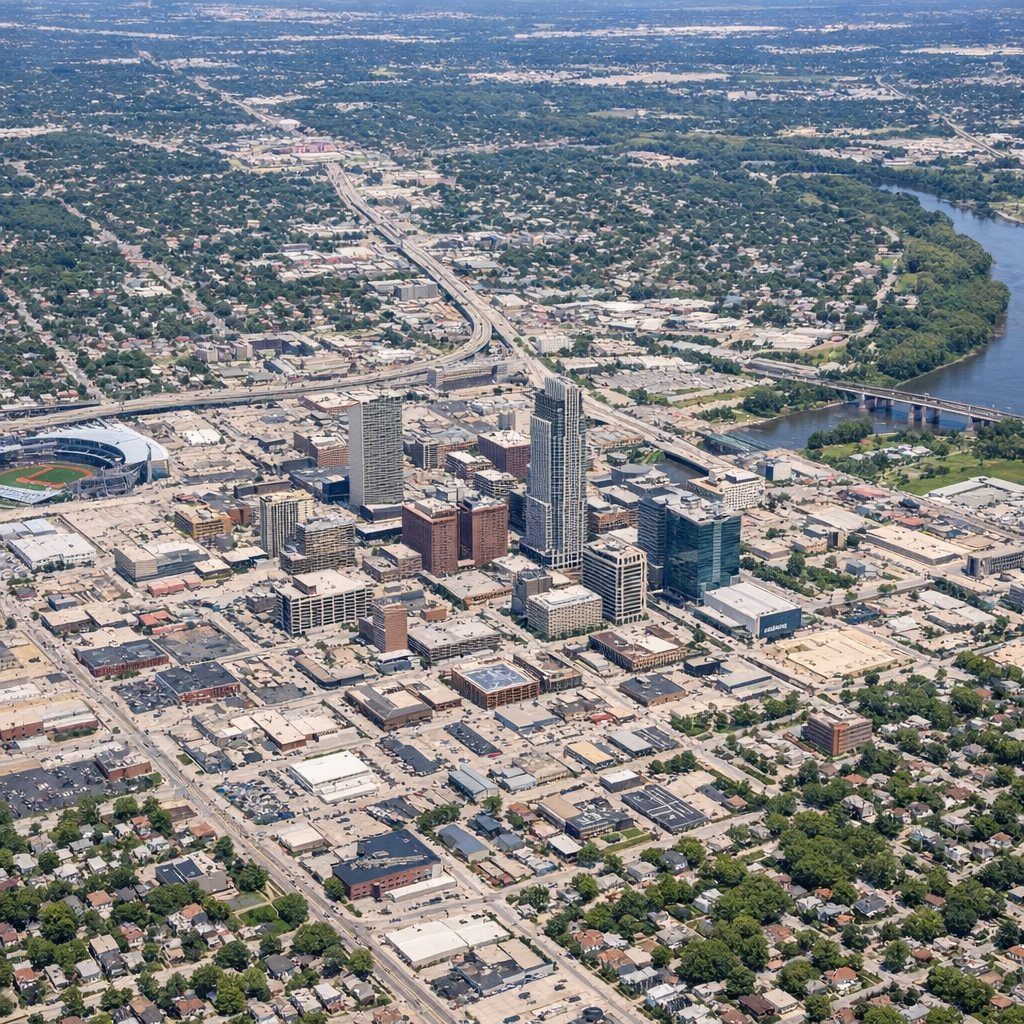
Omaha, Nebraska, experiences a humid continental climate characterized by hot summers and cold winters. This climate results in significant seasonal variations, influencing both daily life and the environment.
Seasonal Climate Patterns
During the summer months, temperatures often reach the upper 80s to low 90s Fahrenheit, with July being the warmest month, averaging a high of 87°F. Winters are notably cold, with January averaging a high of 35°F and a low of 17°F. Precipitation is fairly evenly distributed throughout the year, with June typically being the wettest month, averaging 4.94 inches of rainfall. Snowfall is common in winter, contributing to the city’s annual precipitation.
Environmental Challenges
Omaha faces several environmental challenges, including the urban heat island effect, air quality concerns, and the impacts of climate change.
Urban Heat Island Effect
The urban heat island effect causes certain areas within Omaha to experience higher temperatures than surrounding regions. This phenomenon is due to human-made structures like asphalt roads and buildings absorbing and retaining heat. Studies have shown that neighborhoods with less tree cover and more impervious surfaces can be up to 7°F warmer than greener areas. This temperature disparity can lead to increased energy consumption and health risks, particularly for vulnerable populations.
Air Quality Concerns
Ground-level ozone is a significant air quality concern in Omaha. Formed when pollutants from vehicles and industrial sources react in sunlight, ozone can cause respiratory issues and other health problems. The Omaha Air Quality Control division monitors ozone levels and implements measures to reduce pollution, aiming to protect public health.
Climate Change Impacts
Climate change poses additional challenges for Omaha. Projections indicate an increase in the number of extremely hot days and more intense precipitation events. These changes can exacerbate flooding risks and strain infrastructure. The city is developing a Climate Action and Resilience Plan to address these issues, focusing on reducing greenhouse gas emissions and enhancing community resilience.
Community Initiatives
To combat these environmental challenges, Omaha has initiated several programs. The Omaha Climate Action and Resilience Plan aims to provide comprehensive strategies for reducing emissions and preparing for climate impacts. Additionally, efforts to increase urban greenery and improve air quality are underway, involving community participation and support.
Understanding Omaha’s climate patterns and environmental challenges is crucial for developing effective strategies to enhance the city’s resilience and ensure a sustainable future for all residents.