

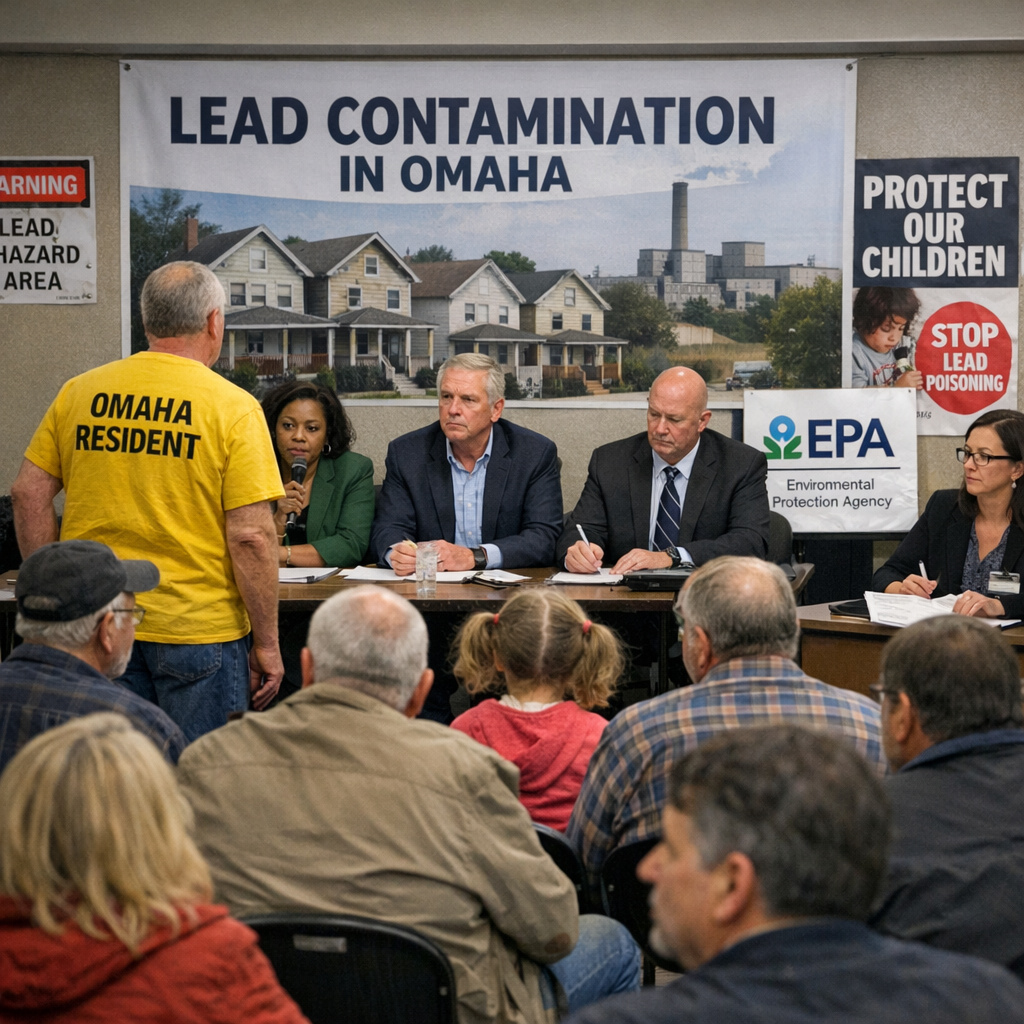
Omaha’s history with lead contamination is both extensive and concerning. For over a century, industrial activities, notably from lead smelters, have left a legacy of lead pollution in the city’s soil. This contamination poses significant health risks, particularly to children, as lead exposure can lead to developmental delays and other serious health issues.
Historical Context and Cleanup Efforts
Recognizing the severity of the problem, the U.S. Environmental Protection Agency (EPA) designated parts of Omaha as a Superfund site, initiating extensive cleanup operations. These efforts have involved soil remediation in numerous residential yards and public spaces. However, challenges persist. Recent reports indicate that many children in affected areas have not undergone blood lead level testing, raising concerns about undetected exposure and its long-term impacts. [Source]
Current Challenges
Despite the EPA’s interventions, lead contamination remains a pressing issue. In 2019, the agency acknowledged that existing cleanup plans might not sufficiently protect residents, leading to a reexamination of the site and potential expansion of remediation efforts. This development underscores the need for ongoing vigilance and adaptation in addressing environmental health hazards. [Source]
Community Involvement and Future Steps
Addressing lead contamination is not solely the responsibility of federal agencies. Local initiatives, community organizations, and residents play a crucial role. Public awareness campaigns, regular health screenings, and community-driven monitoring can significantly contribute to mitigating risks. Moreover, integrating lead safety measures into Omaha’s broader environmental and public health strategies is essential for sustainable progress.
In conclusion, while significant strides have been made in tackling lead contamination in Omaha, the journey is far from over. Continued collaboration, education, and proactive measures are vital to ensure the health and well-being of all residents, particularly the city’s youngest and most vulnerable.