

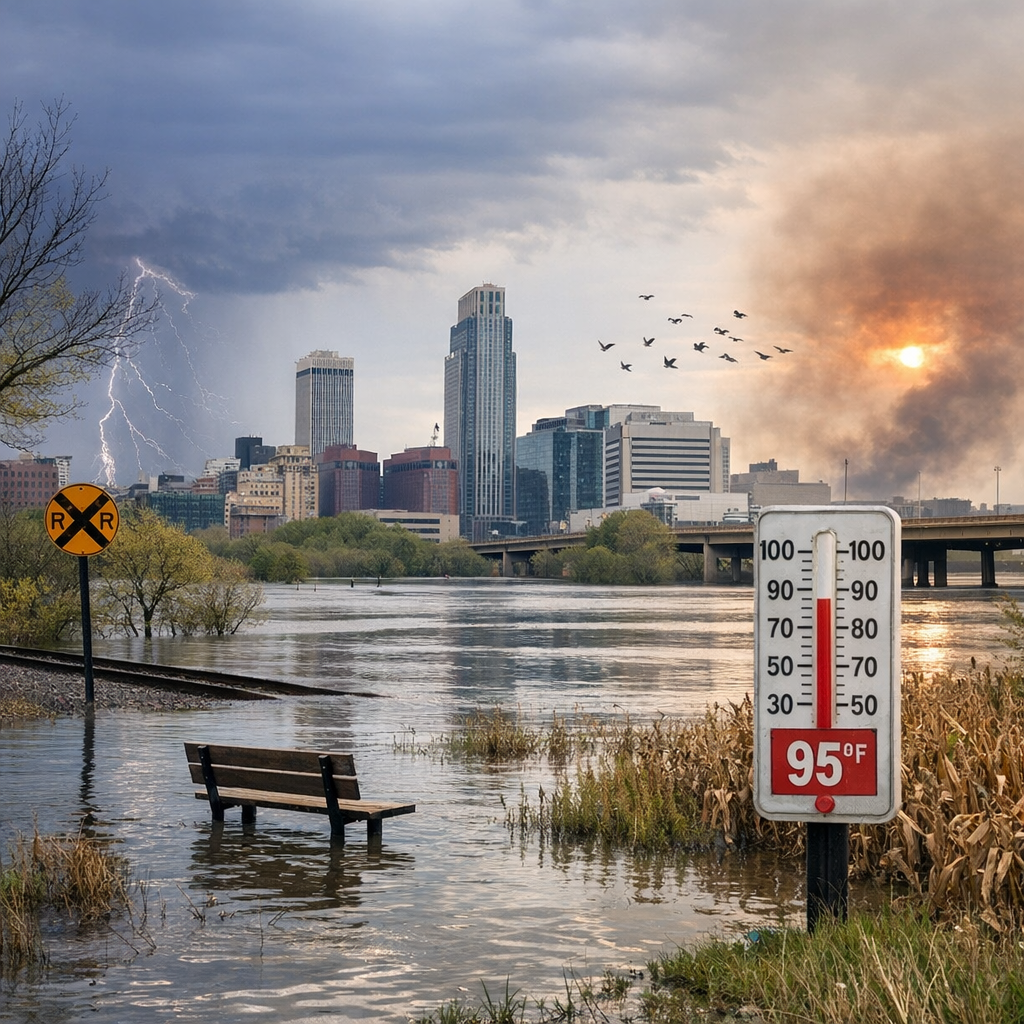
Omaha, Nebraska, experiences a humid continental climate characterized by hot summers and cold winters. This climate results in significant seasonal variations, influencing daily life and the environment.
Seasonal Weather Patterns
In Omaha, temperatures fluctuate widely throughout the year. Winters are cold, with average highs around 35°F (1.6°C) in January, while summers can be hot, with average highs reaching 87°F (30.6°C) in July. The city receives approximately 31 inches of rainfall and 31 inches of snowfall annually, contributing to its diverse weather conditions.
Urban Heat Island Effect
Urban development in Omaha has led to the urban heat island effect, where areas with extensive concrete and asphalt surfaces absorb and retain heat, causing localized temperature increases. Studies have shown that neighborhoods with less tree cover can be up to 7°F warmer than greener areas.
Air Quality Concerns
Ground-level ozone, formed when pollutants react in sunlight, poses health risks in Omaha. Elevated ozone levels can cause respiratory issues, particularly for vulnerable populations such as children, the elderly, and those with pre-existing lung conditions.
Environmental Challenges
Omaha’s geology and infrastructure contribute to environmental challenges like sinkholes. The city has experienced notable incidents, including a significant road collapse in 2026. Factors such as soil composition and aging infrastructure play roles in these occurrences.
Understanding Omaha’s climate and environmental challenges is essential for residents and policymakers to develop strategies that mitigate risks and promote a sustainable future.